August 6, 2021 Chinese State Councilor and Foreign Minister Wang Yi hosted the first meeting of the International Forum on COVID-19 Vaccine...
Read More »
July 9, 2021 The Office of the Commissioner of the Ministry of Foreign Affairs of China in the Hong Kong Special Administrative Region on T...
Read More »
Disappearing Colorado River at a crossroads Let's move beyond the era of dams toward a sustainable future REGISTER Dear Jon, The Colorad...
Read More »
Panellists at a London Climate Action Week event, organised by China Dialogue and E3G, discuss the challenges and opportunities for African ...
Read More »
Purpose of the articles posted in the blog is to share knowledge and occurring events for ecology and biodiversity conservation and protection whereas biology will be human’s security. Remember, these are meant to be conversation starters, not mere broadcasts :) so I kindly request and would vastly prefer that you share your comments and thoughts on the blog-version of this Focus on Arts and Ecology (all its past + present + future).
Because its costs continue to slide with every quarter, solar energy will be cheaper than fossil fuels almost everywhere on the planet by the decade’s end.
Photograph by Irfan Khan / Los Angeles Times / Getty
Subscribers to The Climate Crisis newsletter received this piece in their in-boxes. Sign up to receive future installments.
Earth Week has come and gone, leaving behind an ankle-deep and green-tinted drift of reports, press releases, and earnest promises from C.E.O.s and premiers alike that they are planning to become part of the solution. There were contingent signs of real possibility—if some of the heads of state whom John Kerry called on to make Zoom speeches appeared a little strained, at least they appeared. (Scott Morrison, the Prime Minister of Australia, the most carbon-emitting developed nation per capita, struggled to make his technology work.) But, if you want real hope, the best place to look may be a little noted report from the London-based think tank Carbon Tracker Initiative.
Titled “The Sky’s the Limit,” it begins by declaring that “solar and wind potential is far higher than that of fossil fuels and can meet global energy demand many times over.” Taken by itself, that’s not a very bold claim: scientists have long noted that the sun directs more energy to the Earth in an hour than humans use in a year. But, until very recently, it was too expensive to capture that power. That’s what has shifted—and so quickly and so dramatically that most of the world’s politicians are now living on a different planet than the one we actually inhabit. On the actual Earth, circa 2021, the report reads, “with current technology and in a subset of available locations we can capture at least 6,700 PWh p.a. [petawatt-hours per year] from solar and wind, which is more than 100 times global energy demand.” And this will not require covering the globe with solar arrays: “The land required for solar panels alone to provide all global energy is 450,000 km2, 0.3% of the global land area of 149 million km2. That is less than the land required for fossil fuels today, which in the US alone is 126,000 km2, 1.3% of the country.” These are the kinds of numbers that reshape your understanding of the future.
We haven’t yet fully grasped this potential because it’s happened so fast. In 2015, zero per cent of solar’s technical potential was economically viable—the small number of solar panels that existed at that time had to be heavily subsidized. But prices for solar energy have collapsed so fast over the past three years that sixty per cent of that potential is already economically viable. And, because costs continue to slide with every quarter, solar energy will be cheaper than fossil fuels almost everywhere on the planet by the decade’s end. (It’s a delicious historical irony that this evolution took place, entirely by coincidence, during the Administration of Donald Trump, even as he ranted about how solar wasn’t “strong enough” and was “very, very expensive.”) The Carbon Tracker report, co-written by Kingsmill Bond, is full of fascinating points, including how renewable energy is the biggest gift of all for some of the poorest nations, including in Africa, where solar potential outweighs current energy use by a factor of more than a thousand. Only a few countries—Singapore, Japan, Korea, Taiwan, and a handful of European countries—are “stretched” in their ability to rely on renewables, because they both use a lot of energy and have little unoccupied land. In these terms, Germany is in the third-worst position, and the fact that it is nonetheless one of the world’s leaders in renewable energy should be a powerful signal: “If the Germans can find solutions, then so can everyone else.” Clearly, those few nations are going to be importing some renewable energy—a more farsighted Australian Prime Minister would be figuring out how to send ships full of solar-generated hydrogen to Japan, not how to continue shipping coal to China. (And, in fact, the world’s largest solar farm is set to end up in the Australian outback, connected by at least two thick undersea cables to Singapore.)
The numbers in the report are overwhelming—even if the analysts are too optimistic by half, we’ll still be swimming in cheap solar energy. “We have established that technical and economic barriers have been crossed by falling costs. It follows that the main remaining barrier to change is the ability of incumbents to manipulate political forces to stop change,” the report reads. Indeed. And the problem is that we need that change to happen right now, because the curves of damage from the climate crisis are as steep as the curves of falling solar prices. Given three or four decades, economics will clearly take care of the problem—the low price of solar power will keep pushing us to replace liquid fuels with electricity generated from the sun, and, eventually, no one will have a gas boiler in the basement or an internal-combustion engine in the car. But, if the transition takes three or four decades, no one will have an ice cap in the Arctic, either, and everyone who lives near a coast will be figuring out where on earth to go.
That conundrum was illuminated on Friday, when word came that Governor Gavin Newsom, of California, who has been under pressure from an unrelenting activist campaign, agreed to ban new fracking permits in his state and end fossil-fuel production there altogether. This is a stunning achievement—for the planet and also for the California communities (and you can guess what kinds of communities they are) that currently have oil wells in their schoolyards and next to their hospitals. The environmentalists who banded together in the Last Chance Alliance should be incredibly proud; Newsom (who is now facing a recall election) deserves credit, as well, because this is precisely the step that his famously green predecessor, Jerry Brown, did not take. The fracking ban, though, only affects a small percentage of California’s oil production, and won’t take effect until 2024. The ban on oil production would not happen until 2045, which in climate terms is the very distant future—a decade past the date when California will ban the sale of new gas-powered cars, which are the main use of oil in the state. It’s clear why Newsom is slow-walking the changes. An executive secretary of a building-trades council immediately responded, “We will work to oppose this effort for our membership, their families, our schools, and our future. I have one question for Gavin Newsom: Are our jobs too dirty for you?”
Change is hard. The job of politicians is to make it easier for those affected, so that what must happen can happen—and within the time we’ve been allotted by physics. But that hard job is infinitely easier now that renewable energy is suddenly so cheap. The falling price puts the wind at our backs, as it were. It’s the greatest gift we could have been given as a civilization, and we dare not waste it.
Passing the Mic
Audrea Lim is a Brooklyn-based journalist who has written for this magazine, and also for Harper’s, the Times, and The Nation. She is the editor of the book “The World We Need: Stories and Lessons from America’s Unsung Environmental Movement,” which the New Press will publish next week. For the book, she surveyed America, finding the people who are powering the environmental movement now. (Our conversation has been edited for length.)
People may have an image in their mind of what an environmentalist looks like—but what does an environmentalist actually look like in 2021?
They don’t look any one way! Far from the “white college-educated hippie” stereotype, environmentalists are Black and brown youth transforming an abandoned jail into a community farm; a former coal miner turned blogger and environmental advocate; Asian, Latinx, and indigenous people creating healthier and more equitable neighborhoods for their kids.
“Environmentalist” just describes any people defending the quality of their surroundings. This work can be local (protecting air or water from toxic emissions or lead paint in the walls) or global (protecting the glaciers and oceans that regulate local climates, from Brooklyn’s streets to the Alaskan coast). The health, safety, and well-being of their communities hang in the balance, but many activists understand that these goals also require bigger changes, from better access to parks, recreation, and community spaces to more localized food systems and good, clean jobs. I think that’s why many environmentalists don’t even call themselves “environmentalists.” They are culture-makers, or community, housing, labor, and immigration activists who understand that environmental issues are ingrained in every part of society, and have simply made them a core element of their work.
What are the most important insights that came as, say, the climate movement morphed into the climate-justice movement?
That climate change will touch every community, demographic, and region, but is also on track to devastate poor and bipoc communities the most. Many of these communities already struggle to meet basic needs—food, housing, education, physical and mental health—making them more vulnerable to sudden shocks, as we’ve seen through the pandemic. Many of these communities also live near polluting developments (factories, refineries, waste incinerators) or on eroded and contaminated lands (mines, Superfund sites), or lack proper water and sewage infrastructure. These are added risks when the fires and floods arrive.
This uneven burden is part of America’s legacy of environmental racism: a history of hazardous, polluting fossil-fuel developments being concentrated in communities of color—sometimes by design and often through neglect. It’s the conjoined twin of residential segregation. But, in addressing this reality head on, the climate-justice movement also has another important insight to offer: everyone benefits when we empower these communities to build more equitable, resilient local economies, and transition away from the dirty industries long looming over them.
If you could pick one story that would really stick in people’s minds and hearts, what would it be?
Eric Enos grew up on the Waianae Coast of Oahu, with little knowledge of his Native Hawaiian culture, including the central importance of taro, a root vegetable. (Native culture was suppressed under U.S. colonialism.) After graduating from college, in the seventies, he began teaching art to Native youth-gang members, taking them to dive in the ocean, protest the conversion of local fishing grounds into a resort, and hike in the back of the desiccated Waianae Valley. Here they found abandoned walls and terraces in the ground. These were clearly cultural sites, but what were they?
Archeologists at the Bishop Museum found that the entire area was once under taro cultivation, as well as other traditional Hawaiian plants. The water had long ago been diverted toward colonial sugar plantations, but, with guidance from a state senator and local agencies, Enos, the youth, and community members built a new irrigation system. A group of multi-ethnic taro farmers, whom they had earlier helped defend against eviction from their lands, helped prepare the terraces for cultivation. And, with seeds donated from the Lyon Arboretum, they began growing native plants, learning about the land, their own culture, and taro in the process.
These were the beginnings of Ka‘ala Farm, a cultural learning center that connects troubled youth to the land. The story underscores how different institutions and people from different communities can collaborate toward a more equitable and resilient future.
Climate School
Two former Prime Ministers of Australia wrote an insightful op-ed about why their country, bathed in sun, continues to insist on building more coal mines and gas wells. They note that “the main thing holding back Australia’s climate ambition is politics: a toxic coalition of the Murdoch press, the right wing of the Liberal and National parties, and vested interests in the fossil fuel sector.” Last week, the center-left Australian Labor Party, too, said that it will not stand against building more coal mines, and believes that the nation will be exporting the black rocks past 2050.
A wonderful leftover from Earth Day: Tia Nelson, the daughter of the late senator Gaylord Nelson, who launched the April day of action, in 1970, wrote about how her father helped welcome Joe Biden to the Senate, in 1973, comforting him after his wife and infant daughter had been killed in a car crash. Nelson said, of her father, “It would delight him to see that something he started so long ago, to shake the Washington establishment out of its lethargy, still playing such an important role these many years later. And he would be moved to see that the heartbroken young man he helped recover from despair is carrying his legacy forward.” It’s remarkable how long Biden has been around—one good effect is that he’s known some superb people.
A new study has found that climate change will cause lakes in the Northern Hemisphere to stratify earlier in the year and over longer periods, and that “many of the ecosystem services that lakes provide, ranging from the delivery of drinking water and food to recreation, may be endangered by the projected change in stratification phenology during the twenty-first century, particularly in urbanized and agricultural regions where lakes are already eutrophic.”
A sign of what’s to come: a new renewable-energy project in Oregon marries solar power, wind turbines, and large-capacity battery storage. A spokesman for the local utility, Portland General Electric, said, “We feel pretty certain that this is what the future of renewable power looks like. It’s more diverse, and it’s more flexible.” A little further south and looking a little further into the future, the invaluable Sammy Roth, in his weekly “Boiling Point” newsletter, discusses the possibility of covering California’s irrigation canals with solar panels, to both generate clean energy and cut evaporation.
The Movement for Black Lives is launching a Red Black and Green New Deal, with a virtual summit on May 11th. Its Web site states, “We are organizing to introduce a National Black Climate Agenda that includes federal legislation to address the climate crisis by investing in Black communities and repairing past harms.”
A Yale team has developed a podcast devoted to climate policy and carbon pricing—the most recent episode is about why conservatives might be comfortable with the tactic. As Naomi Shimberg, a junior, explains, “Many conservatives echo the classic economic argument: pricing harm across the economy, rather than controlling it with direct forms of government regulation, is the most efficient way to cut pollution.”
Scoreboard
A new report from the World Meteorological Organization documented just how dismal 2020 was in climatic terms: it was one of the three warmest years on record, with more than eighty per cent of the world’s oceans subject to at least one “marine heat wave;” extensive flooding in the Greater Horn of Africa helped trigger a plague of locusts; and severe drought in South America caused three billion dollars in crop losses in Brazil alone.
A Baylor College of Medicine pediatrician and a University of California, Davis, environmental economist published an assessment, in Scientific American, of the actual health impact of climate change. They argue that the Biden Administration should set the “social cost” of carbon at a higher level, to reflect the damage that it’s doing to “every organ system in the human body.”
Water levels in Lake Powell and Lake Mead are expected to drop to record lows in the coming months, and reduced snowpacks and increased evaporation along the Colorado watershed may trigger the first-ever official water-shortage declaration in the area—and, hence, cuts in the water supply to Arizona and Nevada.
The student-body presidents of all the Ivy League schools signed a joint call for full fossil-fuel divestment last week. Meanwhile, divestment campaigners at Harvard produced a series of comic sketches as part of their ongoing efforts, and Christiana Figueres, the former head of the United Nations convention on climate change who spearheaded the push for the Paris accord, criticized the university for its investments in fossil-fuel companies, warning that Harvard management is on the verge of “breaching its true fiduciary responsibility.”
The Timesobtained a detailed summary of an upcoming United Nations scientific report, which makes clear that, in addition to cutting carbon emissions, controlling methane emissions is crucial in solving the climate crisis. Along with issuing calls for plugging leaks, the report makes the critical point, according to the Times, that “expanding the use of natural gas is incompatible with keeping global warming to 1.5 degrees Celsius, a goal of the international Paris Agreement.”
Warming Up
Bonnie Raitt and the Indigo Girls are among the artists who cut “No More Pipeline Blues (On this Land Where We Belong),” to raise money and awareness for the fight against Minnesota’s Line 3 pipeline. Listen for the voice of the first enrolled member of a Native American tribe to be named U.S. Poet Laureate, Joy Harjo.
Bill McKibben is a founder of the grassroots climate campaign 350.org and a contributing writer to The New Yorker. He writes The Climate Crisis, The New Yorker’s newsletter on the environment.
Approximately 100,000 wolves, bears, mountain lions, and bobcats are killed by trophy hunters every year in the U.S. for their skins, heads, a trophy, or for bragging on social media. By killing America’s iconic native carnivores at this alarming rate, trophy hunters remove wildlife species that are vital to maintaining the health and balance of our country’s biodiversity. This is always a fitting concern, but it takes on special importance as we reflect on Earth Day (April 22). In addition to the suffering and death inflicted on animals, the fate of imperiled wildlife species also foretells some of the risks that threaten all of us who inhabit this planet. Our fates are inextricably intertwined.
Native carnivores are “keystone” species – other species depend on them for food and keeping their habitats in balance. Trophy hunting removes these animals from our wild spaces, harming other species and sending shock waves through entire ecosystems.
Native carnivores also help to control disease transmission and keep prey populations in check. Larger carnivores, like wolves and mountain lions, can prevent deadly chronic wasting disease from spreading, while smaller carnivores, like coyotes, bobcats, and foxes, prey on mice and other rodents harboring disease-carrying ticks, like the one that transmits Lyme disease to humans.
Conservation biologists are concerned that the killing of keystone carnivores can disrupt entire ecosystems: habitats become less biologically diverse, leading to increased disease, more wildfires, and the loss of healthy forests and plant growth needed to fight climate change.
Carnivore species are slow to reproduce, giving birth to small litters and devoting significant time to their young, who depend on their mothers for multiple years before they can survive on their own. When a trophy hunter kills a mother, her young typically die from starvation or predation.
Trophy hunters usually target the largest and most visually impressive animals to kill, tearing apart stable family units and leaving inexperienced juvenile animals in their place. This can lead to increased conflicts with people.
Trophy hunters often use cruel and unethical methods like baiting with junk food, hound hunting, and trapping. These methods violate the tradition of fair chase and are frequently criticized by hunters themselves.
The unsustainable death tolls tied to trophy hunting put imperiled species at risk of extinction; as more of our wild spaces are lost to development, the animals have still fewer places to thrive and are already under incredible pressure.
Some American trophy hunters also participate in wildlife killing contests targeting bobcats, coyotes, foxes, and other animals. The goal is to kill the most, the largest, and/or the smallest animals. Participants gather in person or online to weigh in and count the piles of carcasses and to give out prizes. Tens of thousands of animals are killed annually for these contests, which are legal in more than 40 states.
Every single wild animal killed simply for thrill offers proof of the dysfunctional relationship human beings have to our natural world. Not only do these animals have intrinsic value, but they are also essential to the biological health of our remaining wild spaces.
We must end trophy hunting before it is too late for native carnivores and the vital balance they bring to our environment. It isn’t just about them, either. Our own well-being and the biological health of our planet are also at stake.
This article was first published by OneGreenPlanet on 18 April 2021. Lead Image Source: AB Photographie/Shutterstock.
What you can do
Support ‘Fighting for Wildlife’ by donating as little as $1 – It only takes a minute. Thank you.
Fighting for Wildlife supports approved wildlife conservation organizations, which spend at least 80 percent of the money they raise on actual fieldwork, rather than administration and fundraising. When making a donation you can designate for which type of initiative it should be used – wildlife, oceans, forests or climate.
For decades it was the only freshwater dolphin species in the world not considered threatened by human activity. The tucuxi of theAmazonheld out even as similar species in South America and Asia were dammed in, poisoned, or killed as bycatch; one is considered to have gone extinct.
Now, the tucuxi (Sotalia fluviatilis) has finally succumbed: in the latest assessment for the IUCN Red List of Threatened Species, this river dolphin has been declared endangered, with threats arising from entanglement in fishing nets to damming of rivers. Those are the same factors that threaten the pink river dolphin (Inia geoffrensis), with which the tucuxi shares a habitat and which was itself declared endangered in 2018.
The pink river dolphin, famous for its color and a central figure in Amazonian folklore, is more docile and an easier subject for scientists to study. Researchers are now seeking to find out more about each of the two Amazonian dolphin species and understand their peculiarities.
A study published in 2019 estimated an abundance of both species in the Tefé River and Lake Tefé, which lie in the interior of Brazil’s Amazonas state. It found that the tucuxi occurs in greater numbers in easily navigable habitats, while the pink river dolphin, with its more flexible body, is able to explore narrower, shallower streams without getting stuck.
Despite the differences, both species face the same threats, and their declining populations were discussed in a 2018 study carried out along 30 kilometers (19 miles) of waterways inside the Mamirauá Sustainable Development Reserve in Amazonas state. The study drew on 22 years of research to conclude that the pink river dolphin population was dropping by half every 10 years; for the tucuxi, it was more rapid: every nine years. Even though the data covered only a tiny stretch of the 25,000 km (15,500 mi) of navigable rivers in the Amazon Basin, a notable factor is that Mamirauá is a protected area under less environmental pressure than much of the rest of the Amazon. The study’s assumption is that, as fast as dolphin populations are dropping within the reserve, on the outside the decline is likely more dramatic.
Dammed in
Among the more common threats to the Amazonian dolphins are hydroelectric plants, bycatch, hunting by and competition with fishers, and mercury poisoning.
The Brazilian government’s 10-year electricity plan calls for the construction of another three large dams in the Amazon by 2029; the 2050 National Power Plan calls for even more. But the Santo Antônio and Jirau dams, operating on the Madeira River since 2012 and 2013 respectively, serve as an example of what could happen if new dams are built in the Amazon: their construction divided the dolphins’ habitat, trapping 50 to 100 individuals between the two dams, leaving them to fall sick or die because of genetic impoverishment.
Bycatch is also a problem for the dolphins, which get snagged in fishing nets when going after trapped fish and subsequently drown. Initial tests are underway in Tefé to tackle the problem using echosounders, a sort of acoustic repellent.
“We will test different frequencies here and in Peru to keep the dolphins out of the nets but not scaring them enough to leave the region,” says Miriam Marmontel, a researcher at the Mamirauá Institute.
Another threat is local fishers’ harvesting of dolphins for their fat, to use as bait for a type of catfish, piracatinga (Calophysus macropterus), that’s widely eaten in the Amazon. A moratorium on piracatinga fishing, which has been extended until June this year, offers a little breathing room for the dolphins. But there are still some fishers who see the dolphins as competition for fish and kill them intentionally.
“I saw them cut off a dolphin’s dorsal fin and leave him flailing about because he had torn their net,” says Marcelo Oliveira, a conservation expert at WWF Brazil.
A pink river dolphin. Image by Mariana Paschoalini Frias.
Oliveira says finding solutions to help fishers and river dolphins coexist is crucial, but adds this won’t happen with new dams being built or gold mining going on.
“There is a huge disconnect between the development model at hand in the Amazon and the needs of native Amazonian species,” he says.
He says the dams not only threaten the dolphins but impact the food security of the people living in the forest as well: “Impeding the flow of rivers is also a threat to fish species that will no longer reach the tables of those who need them to eat.”
Artisanal gold mining presents another danger, through the discharge of mercury into rivers. The mercury enters the food chain through smaller fish, eventually working its way up into the dolphins, where it accumulates and can cause a variety of health problems.
“We found high levels of mercury in the dolphins,” Marmontel says, pointing to a study showing that dolphins can be indicators of the presence of heavy metals in natural aquatic environments. Further studies are expected to evaluate the effects of mercury on the health of cetaceans. “We need to collect samples to check for alterations on the cellular and sub-cellular levels,” Marmontel says.
Going the way of Asian river dolphins
Given the range of threats hanging over them today, the Amazonian dolphins could go the way of freshwater dolphins on the other side of the planet, researchers warn.
“Dolphins in Asia have been under greater threat than here and have suffered many of the same problems as ours,” says Mariana Paschoalini Frias, a researcher at the Aqualie Institute. “If we look at what’s already happened in Asia, we get an idea of the size of the problem we may face shortly here in South America.”
A dam-building spree in Asia has led to the fragmentation and degradation of dolphin populations there. This has driven the decline of the South Asian river dolphin (Platanista gangetica) in India and Bangladesh, and of the baiji (Lipotes vexillifer) in China. The baiji was considered extinct after construction of the Three Gorges Dam and other dams on the Yangtze River. A subspecies of the South Asian river dolphin, P. gangetica minor, is also facing challenges after its population was fragmented by 17 dams.
“Here in Brazil, we are beginning to see this process underway with the Araguaian dolphin,” Frias says. The species, Inia araguaiaensis, which was only described in 2014, is “currently stuck between four dams, and many plans are afoot for the Tocantins-Araguaia region that could subdivide the population into 12 groups,” Frias says.
The Tucuruí dam was one of the first to fragment the species’ population on the Tocantins River. Experts say it will take years of study to really understand the effects of fragmentation on the Araguaian dolphin, including on exchange of genetic information and distribution of prey. “If we don’t take more effective measures beyond simply doing research, like creating conservation policy, we could lose the species soon,” Frias says.
But even research into the Amazon’s river dolphins remains underfunded.
“We still don’t know all the regions where the dolphins exist. They could be disappearing from places which we didn’t even know were their habitats,” Oliveira says.
Being placed on the IUCN Red List is important in bringing visibility to the tucuxi’s plight, as it could leverage resources for more research. “So now the animal is on the endangered list, and where is the data?” Frias says. “I’ve told my team: ‘Let’s invest in studies on the Sotalia because no one else is doing it.’”
In this photo from 1914, U.S. naturalist Charles M. Hoy poses with a freshly killed baiji river dolphin in China. The species is now considered extinct. Image in the public domain.
New tool for conservation
The River Dolphins Dashboard was launched in October 2020 by experts at the South American River Dolphin Initiative (SARDI). It brings together work being done by researchers in Brazil, Peru, Colombia, Bolivia and Ecuador, and provides georeferenced data collected over the last 20 years on the various freshwater dolphin species and their habitats.
“We now have an initiative that updates the dolphin distribution map for all of South America,” says WWF’s Oliveira, who is also coordinator of SARDI. “It is a living platform maintained by many collaborators.”
Data for the platform was collected during 42 expeditions funded by WWF Brazil along 47,000 km (29,000 mi) of waterways.
“Some expeditions lasted 25 days, navigating with specialists counting dolphins from six in the morning until six in the evening,” Oliveira says. “It costs a lot” — between $12,500 and $17,900, he estimates — “and you need 12 people on the boat: one team at the bow and one at the stern to double check.”
A map from the River Dolphin Dashboard shows the distribution of the tucuxi based on data collected by the South American River Dolphin Initiative. Image courtesy of SARDI/WWF Brazil.
As data is uploaded to the platform, it should help shed a light on population trends for the various Amazon dolphin species. The researchers have also been using drones to help count the animals since 2015. Aside from helping with the expeditions, drones have been tested to collect information in areas that are inaccessible by large boats.
“In regions with narrower waterways, we believe conservation unit managers or even community leaders could launch a drone and estimate dolphin population,” says Frias, who is also a curator of the River Dolphins Dashboard and participated in a study published by Cambridge University.
To better understand how the animals circulate throughout the region, expeditions have been carried out since 2017 to install satellite tags on the dolphins’ dorsal fins, allowing researchers to keep track on their location in real time. Thirty of the dolphins tagged to date have preferred more preserved habitats, especially within conservation units.
The River Dolphins Dashboard has become a tool for driving the development of public environmental policy. Oliveira says they’re in talks with ICMBio, the administrative arm of Brazil’s environment ministry, “to see how the platform can help monitor the advances of the national action plan for conservation of aquatic mammals in the Amazon.”
Because it covers a large region of occurrence for the animals, the platform also plans to collaborate with the conservation management plan for river dolphins, which will be validated by the International Whaling Commission’s scientific committee.
“Support from an international commission,” Frias says, “helps apply a little more pressure to make sure the national action plans for conservation of endangered species from each country are actually carried out.”
Citations:
Da Silva, V. M. F., Martin, A. R., Fettuccia, D., Bivaqua, L., & Trujillo, F. (2020). Sotalia fluviatilis. The IUCN Red List of Threatened Species. doi:10.2305/IUCN.UK.2020-3.RLTS.T190871A50386457.en
Pavanato, H., Gomez-Salazar, C., Trujillo, F., Lima, D., Paschoalini, M., Ristau, N., & Marmontel, M. (2019). Density, abundance and group size of river dolphins (Inia geoffrensis and Sotalia fluviatilis) in Central Amazonia, Brazil. IWC Journal of Cetacean Research and Management, 20(1), 93-100. doi:10.47536/jcrm.v20i1.238
Mosquera-Guerra, F., Trujillo, F., Parks, D., Oliveira-da-Costa, M., Van Damme, P. A., Echeverría, A., … Armenteras-Pascual, D. (2019). Mercury in populations of river dolphins of the Amazon and Orinoco basins. EcoHealth, 16(4), 743-758. doi:10.1007/s10393-019-01451-1
Oliveira-da-Costa, M., Marmontel, M., Da-Rosa, D. S. X., Coelho, A., Wich, S., Mosquera-Guerra, F., & Trujillo, F. (2019). Effectiveness of unmanned aerial vehicles to detect Amazon dolphins. Oryx, 54(5), 696-698. doi:10.1017/s0030605319000279
Da Silva, V. M. F., Freitas, C. E. C., Dias, R. L., & Martin, A. R. (2018). Both cetaceans in the Brazilian Amazon show sustained, profound population declines over two decades. PLOS ONE, 13(5), e0191304. doi:10.1371/journal.pone.0191304
Hrbek, T., Da Silva, V. M. F., Dutra, N., Gravena, W., Martin, A. R., & Farias, I. P. (2014). A new species of river dolphin from Brazil or: How little do we know our biodiversity. PLOS ONE, 9(1), e83623. doi:10.1371/journal.pone.0083623
Fighting for Wildlife supports approved wildlife conservation organizations, which spend at least 80 percent of the money they raise on actual fieldwork, rather than administration and fundraising. When making a donation you can designate for which type of initiative it should be used – wildlife, oceans, forests or climate.
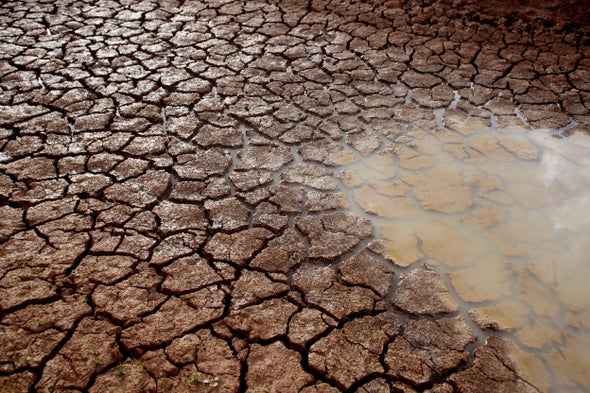
Millions of drinking wells around the world may soon be at risk of running dry. Overpumping, drought and the steady influence of climate change are depleting groundwater resources all over the globe, according to new research.
As much as 20% of the world’s groundwater wells may be facing imminent failure, potentially depriving billions of people of fresh water.
“We found that this undesirable result is happening across the world, from the western United States to India,” said Debra Perrone, a water resources expert at the University of California, Santa Barbara, and co-author of the study.
The research, published yesterday in the journal Science, pulled together construction records from 39 million wells scattered across 40 countries.
Perrone and co-author Scott Jasechko, a fellow water expert at UC Santa Barbara, first recorded the depths of all the wells. They then compared the wells with the groundwater levels, assisted by data from previous studies.
They found that millions of the wells extended less than 5 meters (about 16 feet) below the water table, putting them at risk of running dry. At least 6% of them, and potentially as much as 20%, appear to be in jeopardy.
Those last few meters can dry up quickly, especially in places already stricken by drought.
“In areas where we see extreme rates of groundwater depletion, groundwater levels can decline on the order of a meter or more a year," Jasechko said.
In some places, including parts of the drought-stricken western United States, it’s already happening.
Residents of California’s Central Valley are preparing for another arid summer and the rising risk of dry wells, The Fresno Beereported yesterday. It’s a recurring pattern there. Studies suggest that thousands of wells in interior California have run dry over the last decade or so, under long-lasting drought conditions.
In fact, Jasechko and Perrone published a separate study in the journal Earth’s Future last year suggesting that thousands of wells across the Central Valley ran dry between 2013 and 2018 alone.
That’s a big threat to rural California communities, where at least 1.5 million people rely on groundwater wells.
Digging deeper wells can help address the problem, when it’s possible. But it’s a solution that may be out of reach for many, the researchers point out. Deeper wells are more expensive to construct and maintain.
“This could raise a number of equity and adaptation concerns over the long term, really highlighting the haves and have-nots of water,” Perrone said.
These concerns are only growing as climate change worsens the risk of severe drought in California and other arid regions around the world.
The new study has helped highlight an invisible crisis, according to James Famiglietti and Grant Ferguson, water experts at the University of Saskatchewan in Canada, who wrote a commentary on the new research also published in Science yesterday.
“As groundwater levels decline around the world, only the relatively wealthy will be able to afford the cost of drilling deeper wells and paying for the additional power required to pump groundwater from greater depths,” they wrote. “Lower-income families, poorer communities, and smaller businesses, including smaller farms, will experience progressively more limited access in the many regions around the world where groundwater levels are in decline.”
As a result, governments around the world should be pouring more resources into monitoring groundwater levels and conserving water resources in places that are at risk, they argued.
Otherwise, they said, “the consequences of millions of wells running dry, and perhaps millions more in the decades to come, would be severe and unparalleled at such a scale in human history.”
Reprinted from E&E News with permission from POLITICO, LLC. Copyright 2021. E&E News provides essential news for energy and environment professionals.